A proper farewell for your pet in Washington
By our estimate, about 255,000 households in Washington have a dog or a cat, and roughly 21,500 of those pets die each year. Every one of those families decides how to say goodbye. Here's how to plan yours.
- A simple running order you can print
- Graveside and home ceremony guidance
- Help with timing around the weather

Washington, District of Columbia
Choosing where the farewell happens in Washington
Children in the District often grow up in apartments where a pet is their closest companion, and losing that pet can be their first real loss. Tell them what happened in plain words, and let them help choose a keepsake or plan a small ceremony at home. Teachers see this regularly and can keep an eye on them during a hard week.
Long hours and demanding jobs are common in DC, and grief easily gets pushed to the evenings or weekends. Give yourself time; taking a day off after a pet dies is reasonable, and many federal and private employers include grief counseling in their employee assistance programs. If sadness lingers, a support group or a counselor can help you sort through it.
Long hours and commutes shape daily life in Washington, and a pet's death rarely waits for a day off. In an RSPCA survey of bereaved UK owners, 28.4%[1] couldn't take time off work afterwards. An evening goodbye at home and a weekend gathering can fit around a working week, and asking your manager for a morning off is reasonable.
Washington is home to about 693,645 people.
Our pages for Arlington (4 miles), Hyattsville (6 miles) and Silver Spring (6 miles) describe the same choices from those towns' point of view, and the providers overlap, so a quote from one often covers Washington as well.
Our estimate
255,000
Estimated dog- or cat-owning households in Washington
How we calculated this
693,645 ÷ 2.5 = 277,458 households; × 53% (dog) + 39% (cat) = 255,000. A household with several pets counts once.
Our estimate
21,500
Washington families who lose a dog or cat each year (estimate)
How we calculated this
255,000 dog/cat-owning homes ÷ average lifespan (dog: 12.69 yrs + cat: 11.18 yrs) ≈ 21,500 a year. The real figure is unlikely to be lower.
53%[2]
53% of US households own a dog, which is about 71 million households.
12.69 years[3]
US dogs have an average life expectancy at birth of 12.69 years.
39%[4]
39% of US households own a cat, which is about 53 million households.
11.18 years[5]
US cats seen at Banfield hospitals have an average life expectancy at birth of 11.18 years.
If a number here surprises you, the primary material is American Pet Products Association (APPA) 2025 State of the Industry and Montoya et al. 2023, Frontiers in Veterinary Science; we only apply it to this.

Faith, tradition and pet goodbyes in District of Columbia
In District of Columbia, about 56.9%[6] of people are cremated, a share that has been climbing. Pet farewells are changing in the same way. More families now hold a small ceremony at home or in a crematory's farewell room, and fewer dig a grave in the yard, especially in suburbs where lots are small or rented.
The District of Columbia percentage above is from NFDA 2024 Cremation & Burial Report state projections (via Occasional Sage) (2024) and refers to human funerals. Treat it as context for Washington, not as a count of pets.
Seasons, timing and ceremonies in Washington
Outdoor farewells in Washington are easiest early in the morning or after sunset in June, July and August. A garden burial in the midday heat is hard work for whoever digs, and grieving people get light-headed quickly. Set out water, shade and chairs for older relatives, and keep the words short. You can always gather indoors afterwards.
Warm weather brings flies, which can upset children at an outdoor goodbye. Wrap your pet in a light cotton sheet with only the face showing, keep the outdoor part in deep shade and keep it short. During Washington's June, July and August, many families simply move the ceremony indoors, with the curtains drawn and a fan running.
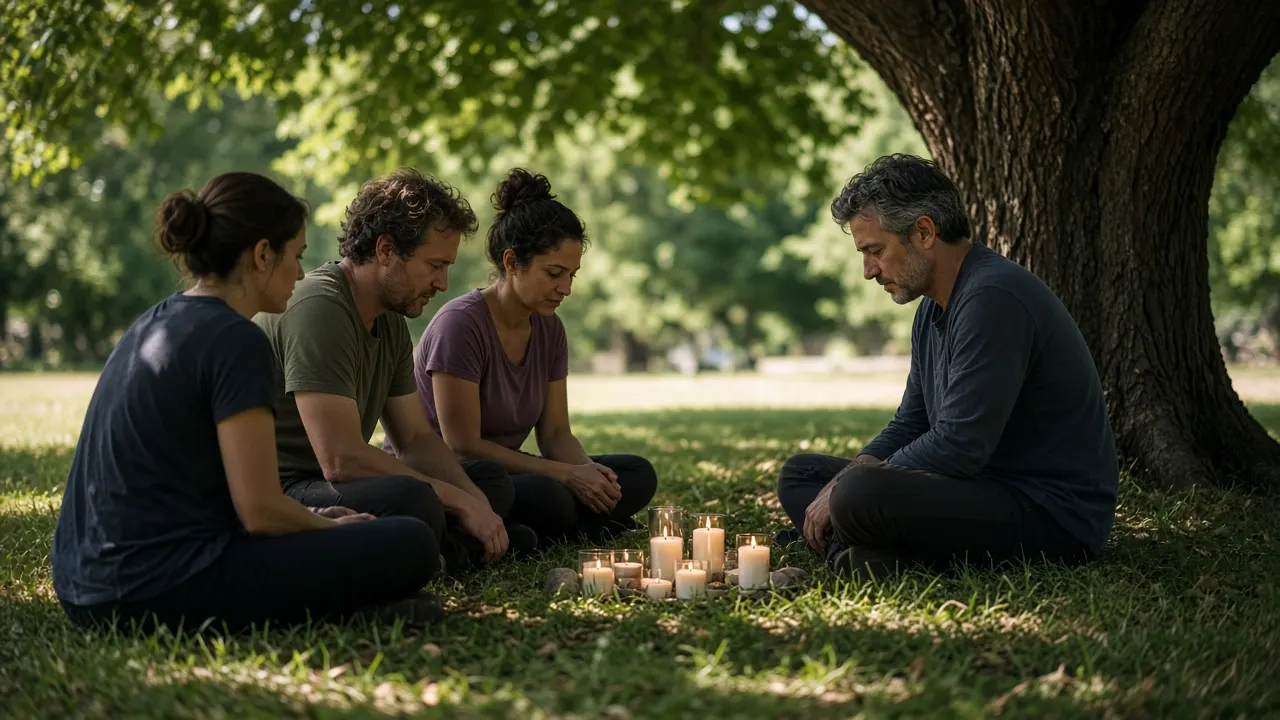
Pet farewell prices for Washington families
The ceremony itself is rarely the expensive part of a pet funeral in Washington. The cost sits in the body care underneath it: private dog cremation averages about $260[7] in the US, and pet cemetery burial about $831[8]. A viewing may be included or charged by the half hour, and a home farewell can cost almost nothing.
For a line-by-line price table, see the District of Columbia overview; for what's included in each option, see our services.

Free tool
Memorial budget planner
Add up cremation, urn, keepsakes and a farewell so the total holds no surprises.
What District of Columbia allows for burial and scattering
Pet cemeteries, parks and private gardens all have different rules. A cemetery handles the permissions for you; a garden burial or a scattering in public is your responsibility. If you rent, ask the landlord before digging. Here's what to know in District of Columbia.
Washington's own guidance is published by District of Columbia Department of Public Works; it covers public collection, which is separate from arranging a private cremation. To find your county or city office in District of Columbia, start with the official District of Columbia local government directory.
Start with the District of Columbia rules, which cover burial, scattering and oversight for the whole state, and treat Washington's local ordinances as a possible extra layer.
A pet funeral within a day: how to do it
- If the goodbye is planned, ask your vet about a home visit and book it early; in-home vets serving Washington can be booked up days ahead.
- Tell the vet what you'd like around it: time before, time after, and collection only once the family is ready.
- Prepare the room: your pet's bed, a blanket, soft light, phones away.
- Give each person, including children, one small job, such as choosing a flower or reading a line.
- Say a few words. One memory per person is enough, and laughing is fine.
- Plan a second gathering for when the ashes come home, if more people want to be there.
Marking the loss, now and later
Washington is full of people from elsewhere, and grieving a pet without family nearby can feel lonely. A farewell in the apartment before collection, dinner with friends who knew your pet, or a video call with relatives back home can all help. Some residents also mark the day the ashes return by lighting a candle or visiting a favorite spot along the Potomac.
or look at how readers voted in our polls, read our guides and latest articles, run the numbers with the free planning tools, See what each option includes on our services page. the full list for District of Columbia and for the United States is a click away.

Reader polls
What would you choose?
Vote anonymously and see how other readers answered. The results are live counts from people who visit this site, so they show real opinions, not a scientific sample.
When would you hold the farewell?
Tap an answer to vote and see how others answered. Anonymous.
Should young children be part of a pet's goodbye?
Tap an answer to vote and see how others answered. Anonymous.
If you had to decide today, which aftercare would you choose for your pet?
Tap an answer to vote and see how others answered. Anonymous.

Free tools to help you plan
Memorial budget planner
Add up cremation, urn, keepsakes and a farewell so the total holds no surprises.

Farewell & memorial service planner
Build a simple goodbye: who, where, readings, rituals and a checklist.

Aftercare options compared
Compare private, communal and water cremation with burial on cost, timing and what comes home.
Questions people ask
Does the Washington climate change what I should do first?
Only the timing. In July, with highs near 90°F, cool the body and book collection the same day. In January and February, when lows sit below freezing, a home burial may have to wait for a thaw, so cremation with ashes returned keeps your options open.
Why does the Washington page quote a human cremation rate?
Because it is the best local signal we have. NFDA 2024 Cremation & Burial Report state projections (via Occasional Sage) (2024) reports about 56.9%[6] of District of Columbia residents are cremated. There is no official pet equivalent, and inventing one would be worse than quoting a real, clearly labelled number.
Which nearby towns can I compare with Washington?
The closest communities we cover are Arlington (about 4 miles), Hyattsville (about 6 miles) and Silver Spring (about 6 miles). Providers based in those places often serve Washington too. Ask each one for a written total that includes collection, so the distance is priced in.
Is Washington big enough to have several pet aftercare providers?
Probably, on the numbers. By our estimate about 255,000 Washington households keep a dog or cat and around 21,500 lose one each year, which is enough steady demand to support more than one provider. We derive that from population (about 693,645), household size and national ownership and lifespan figures.
Can we plan a pet funeral in Washington within a day?
Yes, most pet farewells are arranged that quickly. In the morning, decide cremation or burial and call to hold a time. By midday, message the few people who should come. In the afternoon, choose the spot, a blanket, a candle and something to read. Hold the farewell in the evening, then hand your pet over or lay them to rest.
Should young children come to a pet's farewell?
Usually yes, if they want to, with a simple role and a way to step out. Use plain words like 'died' rather than 'put to sleep', explain what they'll see, and keep it short. In a large RSPCA survey, 93.4%[10] of parents wanted better guidance on helping children through pet loss, so you're far from alone in wondering.


Sources and our estimates
- [1] 28.4% of RSPCA survey respondents could not take time off work after their pet died. RSPCA — Pet Loss Survey Results, 2026.
- [2] 53% of US households own a dog, which is about 71 million households. American Pet Products Association (APPA) 2025 State of the Industry, 2025.
- [3] US dogs have an average life expectancy at birth of 12.69 years. Montoya et al. 2023, Frontiers in Veterinary Science - Banfield Pet Hospital life expectancy tables (13.3 million dogs, 2.4 million cats, 2013-2019), 2023.
- [4] 39% of US households own a cat, which is about 53 million households. American Pet Products Association (APPA) 2025 State of the Industry, 2025.
- [5] US cats seen at Banfield hospitals have an average life expectancy at birth of 11.18 years. Montoya et al. 2023, Frontiers in Veterinary Science - Banfield Pet Hospital life expectancy tables (13.3 million dogs, 2.4 million cats, 2013-2019), 2023.
- [6] The NFDA projected District of Columbia's cremation rate at 56.9% for 2024. NFDA 2024 Cremation & Burial Report state projections (via Occasional Sage), 2024.
- [7] CareCredit's 2025 cost study put the US national average for private dog cremation at $260 (range $206-$473). CareCredit (Synchrony) - How Much Does It Cost To Euthanize a Dog? (2025 ASQ360 procedural cost study), 2025.
- [8] CareCredit's 2025 cost study put the US national average for pet cemetery burial of a dog at $831 (range $659-$1,513). CareCredit (Synchrony) - How Much Does It Cost To Euthanize a Dog? (2025 ASQ360 procedural cost study), 2025.
- [9] Across 15 US pet cemeteries' posted starting burial prices, the median entry price was about $600. Our estimate: median of starting prices [400,185,300,550,575,99,660.44,730,740,850,850,800,850,600,600]. How we calculate.
- [10] 93.4% of parents in the RSPCA survey wanted better guidance on helping children through pet loss. RSPCA — Pet Loss Survey Results, 2026.
Plan your pet's farewell with us
Tell us what you need and where you are. We'll reply by email with clear options and prices so you can decide in your own time.